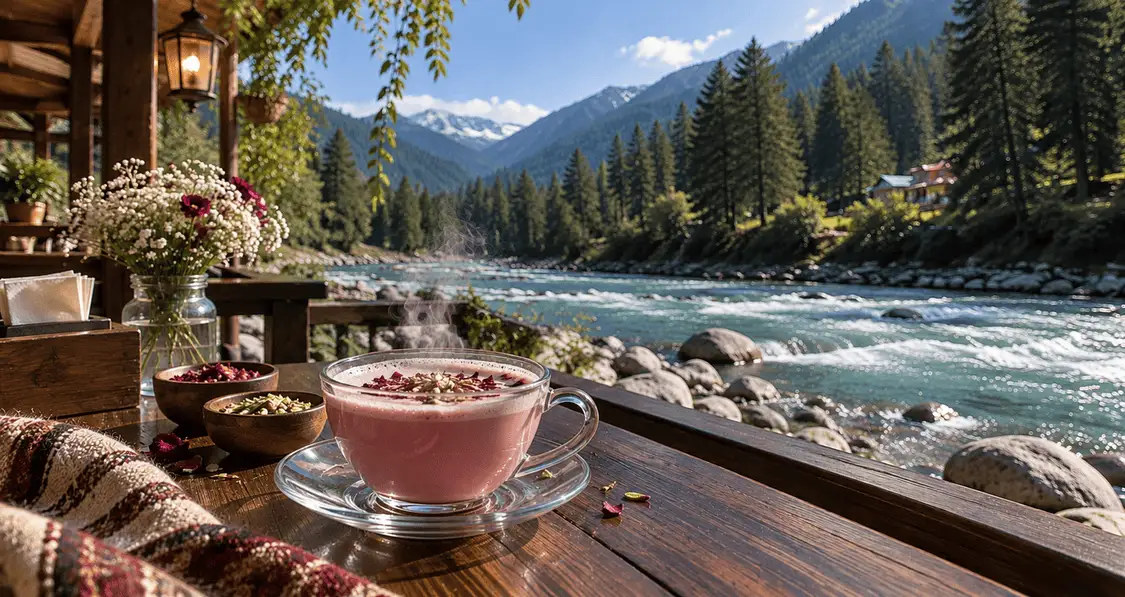
The distinctive pink color is one of the first things people notice about Kashmiri tea. Unlike everyday milk chai, Kashmiri tea follows a different preparation process that can produce its recognizable pink appearance.
So, why is Kashmiri tea pink?
The short answer is that the color develops during the preparation of the tea base. Baking soda, brewing and aeration are part of the process, and adding milk later helps produce the familiar pink appearance of the finished chai.
The exact shade can vary from one cup to another, so homemade Kashmiri tea does not always look identical.
What Is Kashmiri Tea?
Kashmiri tea is a distinctive tea preparation commonly recognized by its pink appearance.
It is prepared differently from the everyday black tea and milk chai commonly served in Pakistani households.
Rather than simply brewing tea and immediately adding milk, Kashmiri tea involves preparing a tea base through a longer process before the finished drink is made.
If you want a broader introduction to this tea, our Kashmiri chai guide explains its preparation and serving style in more detail.
Why Is Kashmiri Tea Pink?
Kashmiri tea does not get its characteristic appearance simply from adding milk to ordinary tea.
Its color develops through the way the tea base is prepared.
The process typically involves brewing the tea with water, using a small amount of baking soda and aerating the mixture. Milk is added later when preparing the finished drink.
Together, these steps help create the distinctive color associated with Kashmiri pink tea.
What Does Baking Soda Do in Kashmiri Tea?
A small amount of baking soda is traditionally used during the preparation of the Kashmiri tea base.
It changes the brewing environment and contributes to the color development that takes place during preparation.
However, more baking soda does not automatically mean a better or pinker cup.
The quantity should remain controlled as part of the overall recipe rather than being added excessively just to change the color.
For exact quantities and preparation steps, follow our Kashmiri chai recipe rather than guessing the amount.
Why Is Aeration Important?
Aeration is another recognizable part of Kashmiri tea preparation.
During preparation, the tea mixture can be repeatedly lifted, poured or stirred so that it comes into contact with air.
This process works together with the other preparation steps involved in developing the tea base.
It is one reason Kashmiri tea generally requires more preparation than a basic cup of everyday chai.
What Happens When Milk Is Added?
Milk is added after the tea base has been prepared.
When the prepared tea base and milk are combined, the finished drink develops the lighter pink appearance commonly associated with Kashmiri chai.
The exact shade can differ depending on the preparation, quantities and ingredients used.
This means your cup does not need to match the exact color of every photograph of Kashmiri tea you see online.
Why Doesn’t My Kashmiri Tea Turn Pink?
If your Kashmiri tea does not develop the pink shade you expected, it does not necessarily mean that one single ingredient is responsible.
Several parts of the preparation work together.
Possible factors include:
- How the tea base was prepared
- The amount of baking soda used
- Brewing process
- Aeration
- The balance between the prepared tea base and milk
Instead of adding excessive baking soda or other ingredients, review the complete preparation process.
Our Kashmiri chai recipe provides the full method in sequence.
Is Pink Food Coloring Needed for Kashmiri Tea?
The traditional preparation method does not depend on simply adding pink food coloring to ordinary milk tea.
The distinctive appearance is associated with the preparation of the Kashmiri tea base and its combination with milk.
If you are preparing Kashmiri tea at home, focus on the brewing process rather than trying to force a particular shade.
Does More Baking Soda Make Kashmiri Tea Pinker?
Adding more baking soda is not a reliable shortcut to a better cup.
Baking soda is only one part of the preparation process.
Using excessive quantities can also affect the finished drink, so it should not be treated as a coloring ingredient that can simply be increased until the desired shade appears.
Follow a measured recipe instead.
Is Kashmiri Pink Tea the Same as Regular Milk Tea?
No.
Regular milk tea can be prepared by brewing black tea and combining it with milk.
Kashmiri pink tea follows a different preparation method in which the tea base is developed before milk is added.
This difference in preparation is one of the reasons the two drinks look and taste different.
Our types of tea guide provides a broader comparison between black tea, green tea and Kashmiri tea.
Is Kashmiri Tea Always Bright Pink?
Not necessarily.
The final color can vary.
Depending on preparation, one cup may appear lighter, while another may have a deeper pink shade.
Lighting and photography can also make drinks appear different in images, so the goal should not be to reproduce an exact digital color.
Following the preparation method consistently is more useful than trying to match a photograph.
What Ingredients Are Used in Kashmiri Tea?
A Kashmiri tea recipe generally involves the tea itself, water, a small amount of baking soda and milk, with other additions depending on the recipe and personal preference.
Because this article focuses specifically on the question of why Kashmiri tea turns pink, the complete ingredient discussion is covered separately in our Kashmiri tea ingredients guide.
Keeping the two topics separate also makes it easier to find the specific information you need.
Choosing Kashmiri Tea for Home
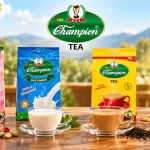
If you want to prepare pink tea at home, Star Champion Kashmiri Pink Tea is available in different pack sizes.
The pack you choose can depend on how frequently your household prepares Kashmiri tea.
Star Champion Kashmiri Pink Tea 125G provides a smaller pack option.
For households requiring a larger quantity, Star Champion Kashmiri Pink Tea 500G provides another option.
Choose according to your expected household usage rather than pack size alone.
How to Get More Consistent Results
If you regularly prepare Kashmiri tea, consistency can help you understand what works.
Try to keep track of:
- Tea quantity
- Water quantity
- Baking soda quantity
- Brewing process
- Aeration
- Amount of prepared tea base
- Milk quantity
If you change several things every time you make the tea, it becomes difficult to identify why the finished color changed.
Following the same basic recipe and making small adjustments is a more practical approach.
Frequently Asked Questions
Why is Kashmiri tea pink?
Its distinctive color develops through the preparation of the tea base. Brewing, a small amount of baking soda and aeration contribute to the process, while adding milk helps produce the familiar pink appearance of the finished drink.
Does Kashmiri tea need food coloring to become pink?
The traditional preparation method does not rely on simply adding pink food coloring. The color is associated with how the tea base is prepared and later combined with milk.
Why didn’t my Kashmiri tea turn pink?
The result can be affected by several parts of the preparation, including the tea base, baking soda, brewing, aeration and the final addition of milk.
Does adding more baking soda make the tea pinker?
More baking soda should not be treated as a shortcut to achieving a particular color. Follow a measured recipe because baking soda is only one part of the overall process.
When is milk added to Kashmiri tea?
Milk is added after the tea base has been prepared as part of the process of making the finished Kashmiri chai.
Is every cup of Kashmiri tea the same shade of pink?
No. The exact shade can vary according to preparation, ingredient quantities and other factors.
The Pink Color Comes From the Process
The answer to why Kashmiri tea is pink lies mainly in how it is prepared.
The tea base goes through a different process from everyday milk chai, involving brewing, a controlled amount of baking soda and aeration. Milk is then incorporated into the prepared base to create the finished drink.
Rather than trying to force a particular color, focus on following the preparation method consistently.
Explore Star Champion Kashmiri Pink Tea if you want to prepare this distinctive tea at home, and follow our Kashmiri chai recipe for the complete step-by-step method.